
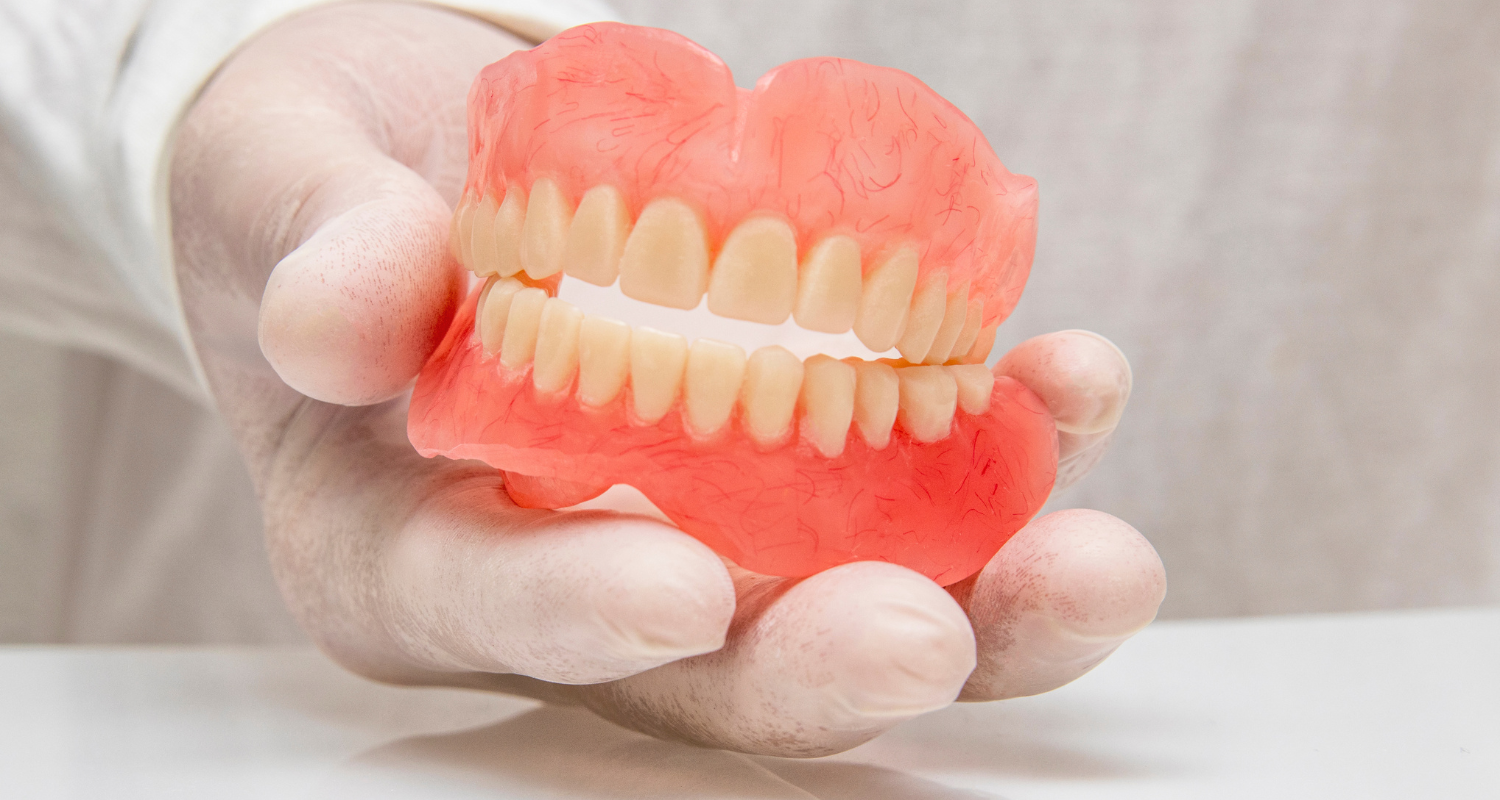
Denture adhesive is a cream, powder, or strip used to help hold dentures against the gums. Not everyone actually needs it. Well fitting dentures can often stay stable on their own, while adhesive gives some people a bit of extra confidence or hold.
The real question is not just whether adhesive helps. It is whether you are leaning on it to cover up a fit problem. Our team at Dental Faith sees this come up often with patients wearing dentures, and it is worth understanding the difference before you reach for another tube.
What Is Denture Adhesive?
Denture adhesive improves retention and stability by creating a stronger seal between the denture and your gums. It comes in a few common forms, including cream, powder, and pre cut strips. Each works a bit differently, but the goal stays the same: helping the denture stay put while you eat and talk.
Adhesive can be used with both complete dentures and partial dentures, though the amount needed often differs based on how much of the denture rests directly on gum tissue. Patients considering implant supported dentures often find they need little to no adhesive at all, since implants provide a different kind of stability.
Do You Really Need Denture Adhesive?
Not everyone does. A properly fitting denture can often stay in place through normal suction and muscle control alone. Still, plenty of people benefit from a small amount of adhesive for extra retention, comfort, or confidence.
Whether you need it depends on things like how well your denture fits, the shape of your jawbone, and how much saliva you naturally produce. There is no single answer that applies to everyone.
When Might Denture Adhesive Help?
You Have New Dentures
New dentures take some getting used to. A little adhesive during this adjustment period can add confidence while you get comfortable eating and speaking. Follow your dentist’s specific guidance during this stage.
You Have Dry Mouth
Saliva plays a real role in keeping dentures naturally stable. If your mouth tends to run dry, your dentures may feel less secure. Adhesive can help here, though addressing the dry mouth itself is also worth a conversation with your dentist.
You Recently Had a Tooth Extraction
If your denture was placed after a tooth extraction, your dentist may recommend waiting before using adhesive, since the healing gum tissue needs time to settle first.
Your Jawbone or Denture Ridge Has Changed
The bone and gum ridge under your denture can change shape over time. As that happens, a denture that once fit well may start to feel loose. Adhesive can offer some extra hold, but ongoing looseness is often a sign the denture itself needs a closer look.
You Want Extra Confidence During Meals or Social Events
Some people simply like the added peace of mind adhesive provides during a big meal or an important event. This is a personal choice, not something everyone needs on a daily basis.
When Should You Avoid Using Denture Adhesive?
Adhesive is not the right fix in every situation.
- Your dentures are poorly fitting or shifting constantly
- Wearing them causes ongoing pain
- You notice persistent sores or irritation
- You recently had a tooth extraction, unless your dentist says it is fine
- You find yourself using large amounts every single day
If your dentist has given you different instructions, follow those over general guidance like this.
Does Needing Denture Adhesive Mean Your Dentures Don’t Fit?
Sometimes, yes. A good fit generally leads to stable dentures, where adhesive becomes optional rather than necessary. A poor fit tends to show up as movement, discomfort, or a growing need for more adhesive over time.
If you find yourself reaching for adhesive constantly just to get through the day, mention it at your next visit. It could point to a need for a denture adjustment, a reline, or a look at whether dentures with dental implants might serve you better long term.
How to Apply Denture Adhesive Correctly
- Clean and dry your dentures fully first, following the product’s instructions
- Use the smallest amount that gives you the hold you need
- Apply it to the areas the product recommends
- Seat the denture carefully and hold it in place briefly
- Avoid piling on more adhesive if the first layer does not feel like enough
- Clean both your dentures and your gums regularly
How Much Denture Adhesive Is Too Much?
More adhesive does not automatically mean a better hold. If you use a large amount every day, or struggle to fully clean off the residue, that is often a sign something else is going on. Persistent movement despite generous adhesive use is worth bringing up with your dentist rather than just adding more product.
What Type of Denture Adhesive Is Best?
| Type | Key Points |
| Cream | A common choice, useful for added retention |
| Powder | Lightweight and spreads evenly across the denture |
| Strips | Convenient and easy to measure consistently |
| Thermoplastic | An alternative format with a different application method |
No single type works best for everyone. It often comes down to comfort and personal preference.
What Is Zinc Free Denture Adhesive?
Zinc free adhesive simply means the product does not contain zinc as an ingredient. Some people look for this option on purpose. As with any adhesive, following the product directions and avoiding excessive use matters more than the exact formula. If you are unsure which option fits you, our Nashville team is happy to point you in the right direction.
Denture Adhesive for Partial Dentures
Partial dentures rely partly on your remaining natural teeth for support, which makes them a bit different from full dentures. Fit and the condition of those supporting teeth both affect how stable a partial feels. Adhesive can offer additional retention in some cases, but a proper professional fit remains the real foundation. If gum health is part of the concern, our guide on dental implants and gum disease covers a related question we hear often.
What Can You Use Instead of Denture Adhesive?
Rather than reaching for a household alternative, which is not recommended, consider these dental options instead.
- A denture adjustment to fine tune the fit
- A denture reline to update the fit as your gums change
- A denture replacement when the current one is beyond adjusting
- Addressing dry mouth with your dentist’s guidance, since it plays into overall preventive dentistry
- A professional evaluation to identify what is really causing the looseness
When Should You See a Nashville Dentist About Loose Dentures?
Reach out if you notice any of the following.
- Your dentures keep slipping during normal activities
- Eating has become difficult or uncomfortable
- You notice pain or sore spots developing
- Irritation that does not go away
- Your dentures feel looser than they used to
- You need a large amount of adhesive just to get through the day
Our restorative dentistry team can check your fit and walk you through what is causing the looseness. Many patients wearing dentures alongside missing teeth also ask about candidacy for dental implants for seniors, which is worth exploring at the same visit.
Frequently Asked Questions
Is denture adhesive necessary?
Not for everyone. Well fitting dentures can stay stable without it, though some people use it for extra confidence.
Will dentures stay in place without adhesive?
Often, yes, if the fit is good. Persistent looseness usually points to a fit issue rather than a lack of adhesive.
Is denture adhesive safe?
Yes, when used as directed and not in excessive amounts.
How much denture adhesive should I use?
Use the smallest amount that gives you the hold you need, following the product’s specific instructions.
What can I use instead of denture adhesive?
A denture adjustment, reline, or replacement are the main dental solutions worth exploring with your dentist.
Can denture adhesive fix loose dentures?
It can mask looseness temporarily, but it will not correct an underlying fit problem.
If your dentures feel loose more often than not, schedule a visit with Dental Faith. Not sure yet whether dentures, partials, or implants fit your situation best? Our team explains what kind of dentist handles implants and dentures so you know exactly who to see. We will take a look and help you figure out whether adjustment, adhesive, or something else is the right next step.