

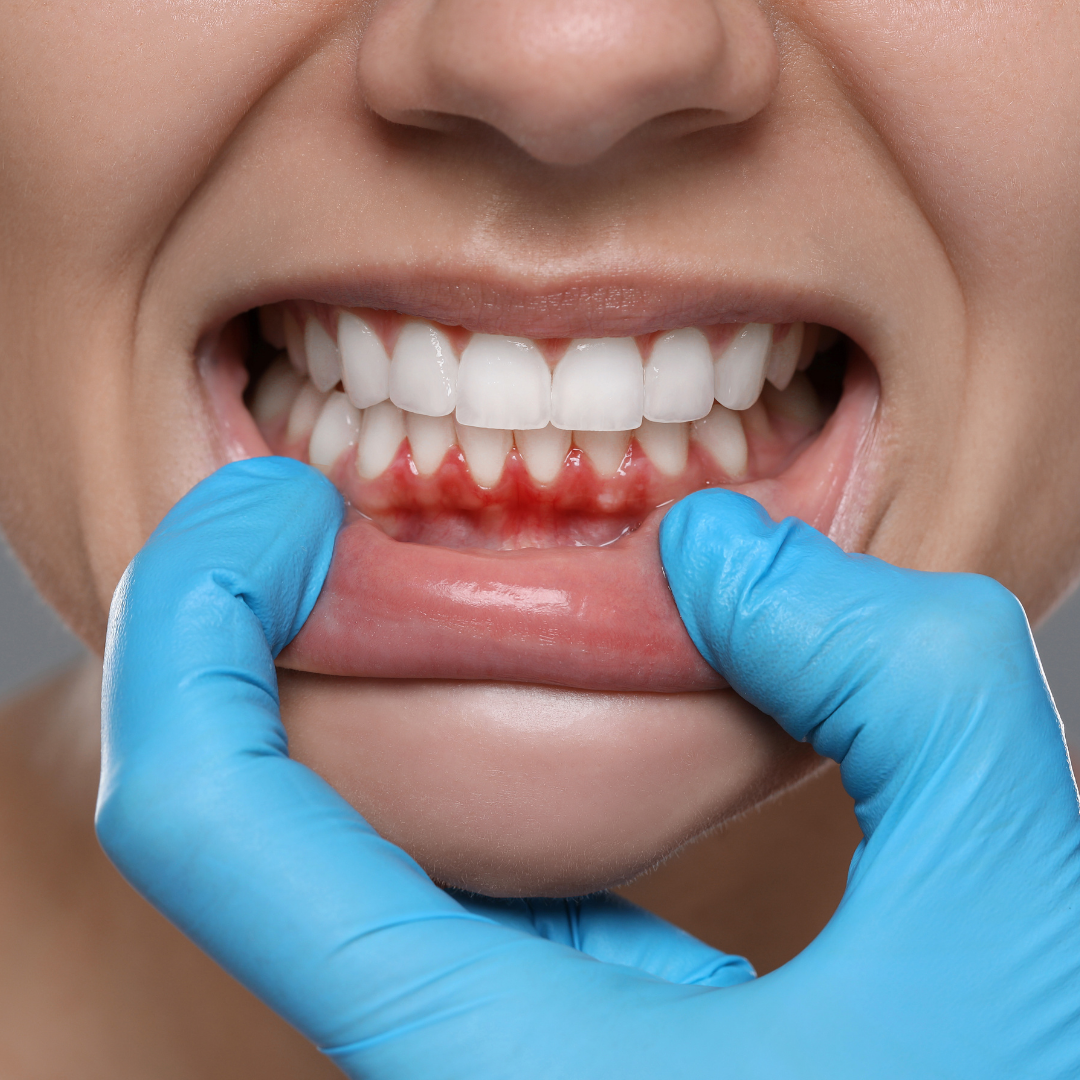
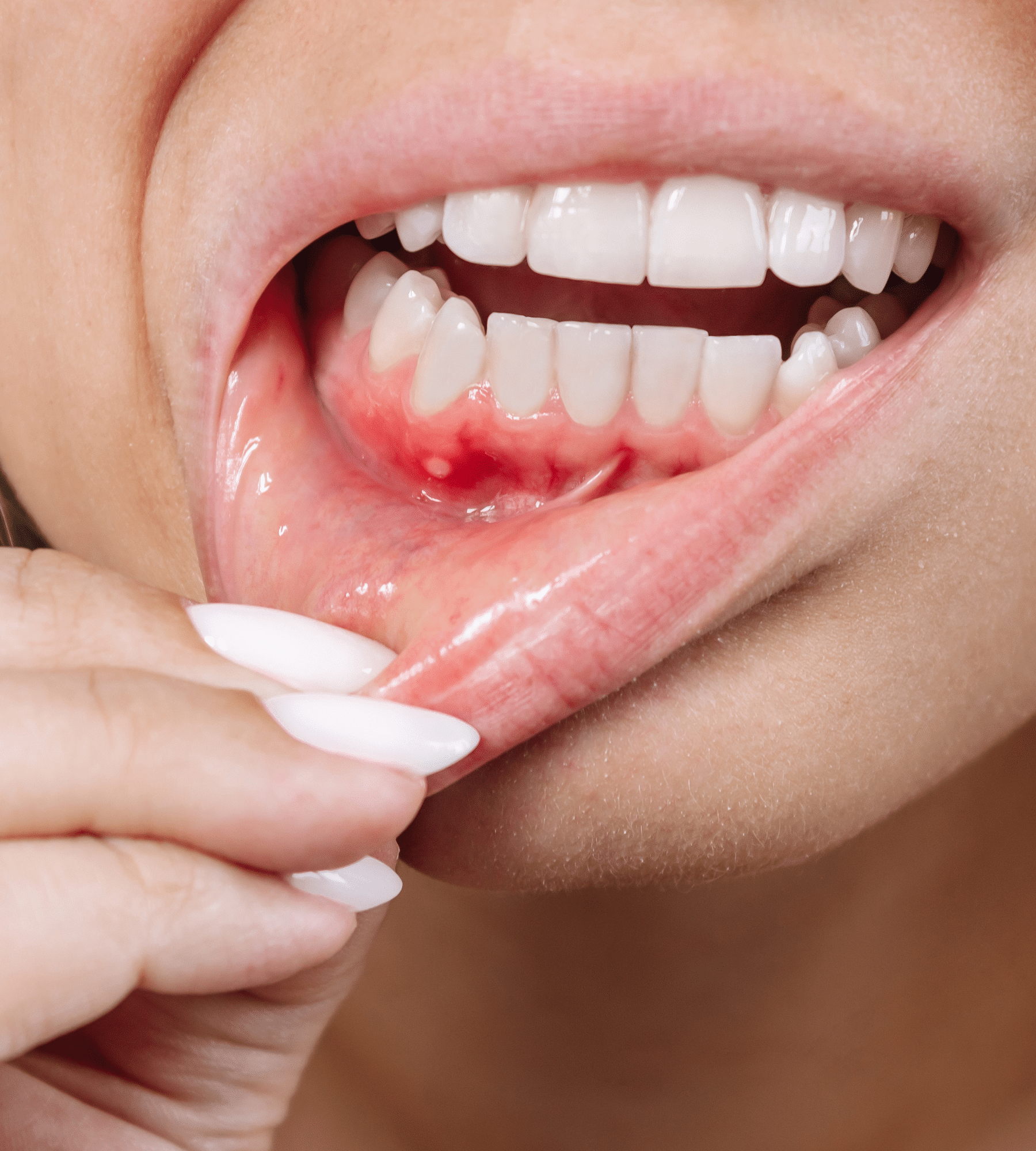
Gums that bleed when you brush or floss are not normal. It’s usually the first sign of gingivitis, the early, reversible stage of gum disease. Left untreated, it can progress to periodontitis, which damages the bone that holds your teeth.
Dr. M. Paula Fedler checks your gums, measures any pockets and explains what’s causing the bleeding and how to stop it.
| Difference | Gingivitis | Periodontitis |
What’s affected | Gums only | Gums, bone and the fibers that hold the teeth |
Signs | Red, swollen gums that bleed when brushing | Bleeding plus receding gums, bad breath, loose or shifting teeth |
Gum pocket depth | Usually 1–3 mm | 4 mm or deeper |
Can it be reversed? | Yes, with a cleaning and better home care | It can be controlled, but bone loss doesn’t grow back |
Typical treatment | Professional cleaning | Scaling and root planing, then more frequent cleanings |
Treatment depends on what is causing the bleeding and whether gum disease is present. Care may include a professional cleaning, changes to your home-care routine, scaling and root planing, or treatment coordinated with a gum specialist.
Removes plaque and hardened tartar that brushing can’t. For gingivitis, a cleaning plus good home care often stops the bleeding within a few weeks.
When pockets are 4 mm or deeper, we clean below the gumline and smooth the root surfaces so the gums can reattach. The area is numbed first.
After a deep cleaning, cleanings every three to four months help keep gum disease from returning.
We show you the brushing angle, the right brush and how to clean between your teeth, so the bleeding doesn’t return between visits.
Advanced periodontitis sometimes needs a periodontist (gum specialist). If so, Dr. Fedler refers you and coordinates your ongoing care.
Smiles transformed
Google reviews
English & Spanish
Appointments available

If you take blood thinners or your gums bleed heavily without brushing, also tell your physician.
What Happens When You Come In for Emergency Care? We make the process as simple and fast as possible when you are in pain.
We ask about bleeding, medications, smoking, diabetes, pregnancy and past gum treatment.
Dr. Fedler checks for redness, swelling, recession, tartar and loose teeth.
A small probe measures the space between each tooth and gum in millimeters. Healthy pockets are usually 1–3 mm.
X-rays show the bone level. You get a treatment plan and its cost before anything starts.


 Trustindex verifies that the original source of the review is Google.
 Trustindex verifies that the original source of the review is Google.
 Trustindex verifies that the original source of the review is Google.
 Trustindex verifies that the original source of the review is Google.
 Trustindex verifies that the original source of the review is Google.
 Trustindex verifies that the original source of the review is Google.
 Trustindex verifies that the original source of the review is Google.
 Trustindex verifies that the original source of the review is Google.
 Trustindex verifies that the original source of the review is Google.
 Trustindex verifies that the original source of the review is Google.
Our team is a trusted dental office in Nashville. Contact us today!
Book an exam if you notice:
Call the same day if you have significant swelling, pus, fever or bleeding that’s hard to stop.
You can also send us a quick text message at (615) 285-3949.
We look forward to hearing from you soon!
Usually because plaque along the gumline has caused gingivitis. Brushing too hard, a new flossing routine, pregnancy and blood thinners can also cause bleeding.
It’s common but not healthy. If bleeding doesn’t stop after one to two weeks of daily, gentle flossing, have your gums checked.
Yes, if the cause is gingivitis. A professional cleaning and good home care usually return the gums to health. Bone lost to periodontitis doesn’t grow back, but the disease can be controlled.
No. Gentle daily flossing is part of the cure. Stopping lets plaque build up and the bleeding continue.
Scaling and root planing cleans below the gumline where pockets have formed. The area is numbed, so it shouldn’t hurt during the visit. Mild tenderness for a few days is normal.
A routine cleaning is [CONFIRM price], and scaling and root planing is [CONFIRM price per quadrant]. Insurance often covers part of both. You get an estimate after the exam.
Research links gum disease with conditions such as diabetes and heart disease. Healthy gums are part of overall health.
Pregnancy gingivitis is common because of hormone changes. A cleaning during pregnancy is safe and recommended. Let us know how far along you are.
Are your gums bleeding when you brush or floss? Contact Dental Faith to schedule an examination with Dr. M. Paula Fedler.