
Yes, dental X-rays are safe for most people when a dentist orders them for a good reason. The radiation dose is very low, and modern equipment keeps it lower still. X-rays also show problems that your eyes and a mirror cannot see, like decay between teeth or bone loss under the gums.
Many patients still ask if they really need them. That is a fair question. At Dental Faith, we believe you should know why we take an image, how much radiation is involved, and how often you need one. This article answers those questions in plain words so you can feel confident at your next visit.
Are Dental X-Rays Safe?
When used the right way, yes. Any X-ray uses radiation, and high doses can harm cells. But a dental X-ray uses a tiny dose aimed at a small area of your mouth.
The American Dental Association (ADA) says dental X-rays should be ordered only when they are clinically necessary. In January 2026, the ADA released its first updated X-ray recommendations in more than ten years. A key point is that your dentist should first look at your health history, your past X-rays, and your exam findings. The decision to take a new image comes after that.
So why take them at all? Because teeth hide problems. Many dental issues cause no pain at first. An X-ray can show:
- Early tooth decay between teeth or under a filling
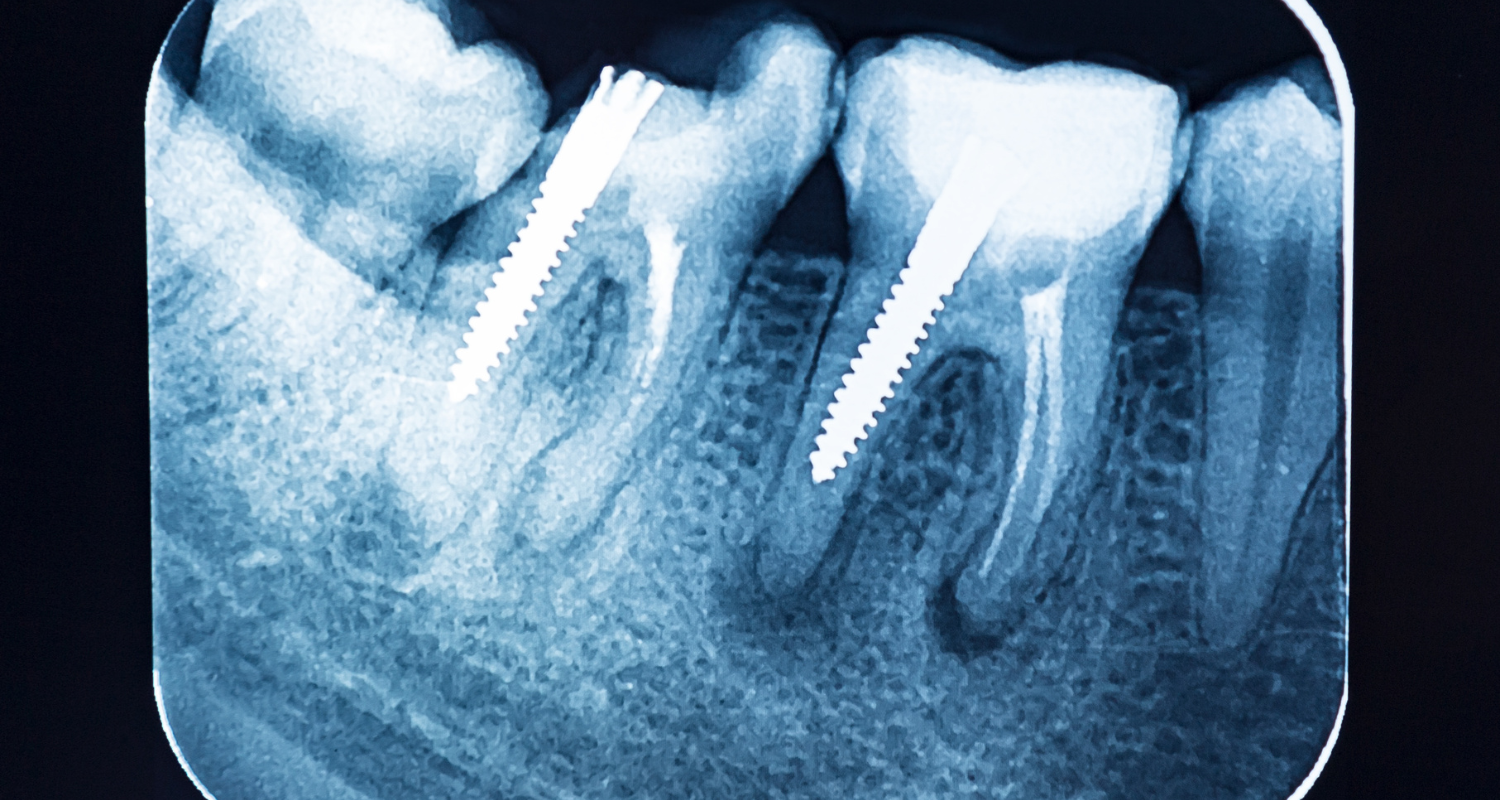
- Infection at the tip of a tooth root, which may need a root canal
- A pocket of infection, such as a tooth abscess
- Bone loss caused by gum disease
- Teeth that are stuck under the gums, including impacted wisdom teeth
- Cysts and other changes in the jawbone
Finding a problem early usually means a smaller, simpler fix. That is the main benefit of imaging.
How Much Radiation Do Dental X-Rays Expose You To?
The dose is small. We all get natural radiation every day from soil, air, and space. In the United States, that adds up to about 3,000 microsieverts a year, or roughly 8 microsieverts each day.
Here is how common dental images compare, based on figures shared by the ADA.
| Type of image | Approximate dose | Compared with natural radiation |
| Bitewing X-ray | About 5 microsieverts | Less than one day |
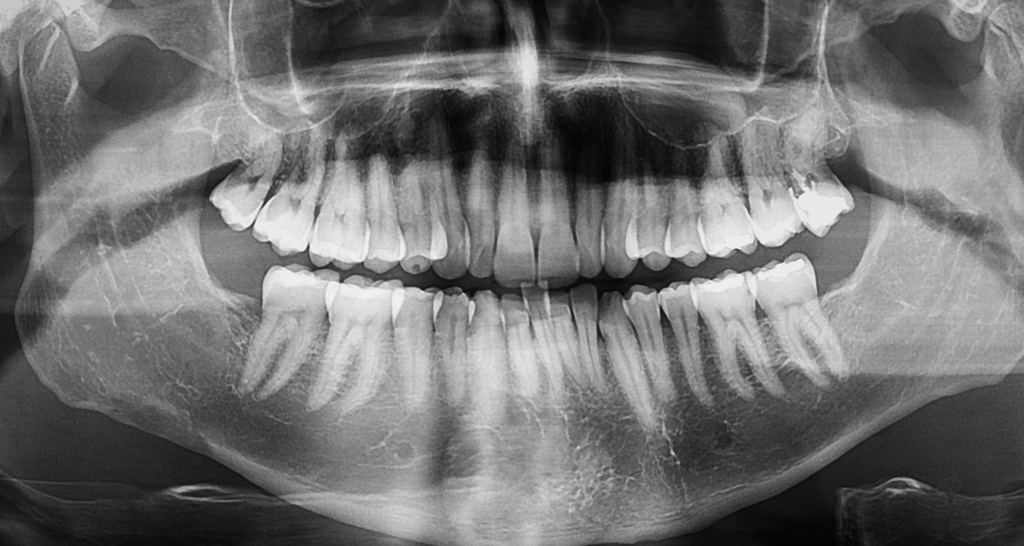
| Panoramic X-ray | About 20 microsieverts | About two to three days |
A full mouth series uses more images, so the total is higher. It is still a low dose. A 3D scan called cone beam CT uses more radiation than a standard image. The ADA says it should be used only when lower dose images cannot answer the question.
A few things change your exposure:
- The type of image taken
- How many images are needed
- The age and quality of the equipment
- The skill of the person taking the X-ray, since good positioning avoids retakes
Are Digital Dental X-Rays Safer Than Traditional X-Rays?
Digital X-rays use a small sensor instead of film. The image appears on a screen right away, so there is no waiting for film to develop.
Sensors pick up the beam more efficiently than film. ADA materials note that digital dental X-rays can cut the dose by about 40 to 60 percent compared with older film. That is a real gain, especially for children and for patients who need images more often.
Digital images have other perks:
- You can zoom in and adjust the contrast to spot small changes
- Files are saved safely and compared over time
- Images can be sent to a specialist in seconds, which helps avoid repeat X-rays
How Often Should You Get Dental X-Rays?
There is no single schedule for every patient. Your dentist decides based on:
- Your age
- Your current oral health
- Your dental history
- Your risk of cavities
- Any symptoms you have
Some patients with a low risk of cavities can go longer between bitewing X-rays. Patients with a higher risk may need them more often. Higher risk can come from a history of cavities, gum disease, dry mouth, or a diet with frequent sugar.
Do you need X-rays every year? Not always. Annual X-rays are not a rule for everyone. Your dentist should explain why an image is needed at each visit. Your routine dental exams still include a careful look at your teeth and gums, even when no X-ray is taken.
When are full mouth X-rays used? A full mouth series is a set of images that shows every tooth from crown to root. A dentist may suggest one for a new patient who has no recent images. It may also help when planning dental implants, checking advanced gum disease, or treating a complex problem. Most routine visits only need a few bitewing images of your back teeth, if any.
If you are new to our office, ask us to request your old X-rays from your last dentist. Using past images can save you from extra radiation.
Are Dental X-Rays Safe for Children?
Yes, when they are ordered for a clear reason. Children may need X-rays for a few reasons.
- To find cavities between baby teeth that touch each other
- To see how permanent teeth are growing under the gums
- To check for extra, missing, or crowded teeth
- To plan treatment after an injury
An X-ray can also help parents who are wondering when kids lose their baby teeth, since it shows if the adult tooth is on its way. If a baby tooth is lost early, an image helps the dentist decide if a space maintainer is needed to hold the gap open.
Dentists use child sized sensors and lower settings for young patients. The first visit often has no X-ray at all if the child is very young or the teeth can be seen clearly. If you want to ease your child’s nerves, tips for their first dental visit can help the day go smoothly.
Every child is different. Your dentist looks at age, tooth growth, and cavity risk before ordering any image.
Are Dental X-Rays Safe During Pregnancy?
The ADA and the American Academy of Oral and Maxillofacial Radiology say dental X-rays are safe during pregnancy. The dose reaching a baby is extremely small, up to 30,000 times lower than the level needed to cause harm.
Still, always tell your dentist if you are pregnant or think you might be. Many dentists hold routine X-rays until after the baby arrives if the exam shows no problems. That is a reasonable choice.
If you have pain, swelling, or signs of infection, waiting may not be the safest path. A toothache that is not treated can turn into a serious infection. In that case, a few targeted images may be the best way to find the cause.
Pregnancy can also raise the risk of gum problems such as gingivitis, so keep up with your dental visits.
Can Dental X-Rays Detect Oral Cancer?
Not reliably. Dental X-rays show teeth and the bones of the jaw. They may reveal an odd shadow or bone change that leads to more testing. But most oral cancers start in soft tissue, like the tongue, cheeks, lips, gums, and the floor of the mouth. These areas do not show well on a dental X-ray.
That is why your dentist does a hands on check of your mouth and neck. An oral cancer screening looks for sores, lumps, and color changes. Some offices also use a small camera to take close up photos of your mouth, which makes it easier to track changes over time.
If something looks unusual, your dentist may suggest more tests, such as a biopsy. A biopsy is the only way to confirm a diagnosis.
What Safety Precautions Do Dentists Take During Dental X-Rays?
Dentists follow a rule called ALARA. It stands for “as low as reasonably achievable.” The goal is to get the information needed with the least radiation possible.
In practice, that means:
- Ordering an X-ray only when it will help guide care
- Reviewing your past images first
- Using digital sensors or fast film
- Using beam shaping tools that limit the X-ray beam to the size of the sensor
- Positioning the sensor correctly the first time to avoid retakes
- Using a 3D scan only when a standard image cannot answer the question
What about the lead apron and thyroid collar? For many years, they were standard. In 2024, the ADA reviewed the research and said routine thyroid and abdominal shielding is no longer recommended, because doses are so low and techniques have improved. Some states and offices still use shielding, and some patients feel more at ease with it. If you have a preference, just ask your dental team.
Should You Refuse Dental X-Rays?
You have the right to ask questions and to say no. But it helps to know what is at stake on both sides.
The risk of unnecessary X-rays is a small amount of added radiation with no benefit. That is why dentists should not take images by habit.
The risk of skipping needed X-rays is missing a problem. Cavities between teeth, infection, and bone loss often cause no pain at first. Even old fillings can decay underneath without hurting. By the time you feel pain, the fix may be bigger and cost more. That matters if you are planning for dental care without insurance, since catching a problem early usually keeps costs down.
So if you do not have pain, should you skip the X-ray? Not by default. No pain does not mean no problem. A better step is to ask your dentist:
- Why do I need this image today?
- What are you looking for?
- Can you use my old X-rays instead?
- What happens if we wait?
A good dentist will welcome these questions and answer them clearly.
When Should You Talk to Your Dentist About Dental X-Rays?
Bring it up any time you feel unsure. It is worth a conversation if you have:
- Questions about how often you need X-rays
- Worries about radiation
- A pregnancy or a possible pregnancy
- Recent X-rays from another office
- A health condition that may change your dental needs
Needs also shift with age. Older adults often have more fillings, crowns, and gum concerns, so their imaging plan may look different from a teenager’s.
If you have severe pain, swelling, or a knocked out tooth, do not wait for a routine schedule. Learn what to do in a dental emergency and call a dentist right away. Imaging may be part of getting you out of pain fast.
For families in Nashville, Brentwood, and Franklin, the team at Dental Faith is here to talk through your options. Many people choose us as their family dentist in Nashville because we explain each step and never rush your questions.
Frequently Asked Questions
Are dental X-rays safe? Yes. The dose is very low, and dentists order them only when needed. They help find problems you cannot see or feel.
Is it safe to get dental X-rays every year? For most people, the dose from a yearly set of bitewing X-rays is small. Still, not everyone needs them every year. Your dentist should base the schedule on your risk.
How often should I get dental X-rays? It depends on your age, oral health, history, and cavity risk. Some people need them less often, and some need them more.
How often do adults need dental X-rays? There is no fixed number. Adults with healthy teeth and a low cavity risk may need them less often than adults with a history of decay or gum disease.
How often should you have full mouth X-rays? Not on a routine schedule. A full mouth series is usually taken for new patients, for treatment planning, or when a complex problem needs a closer look.
Are digital dental X-rays safer than traditional X-rays? Digital X-rays use less radiation than older film. They also give you instant images that are easy to save and share.
Are dental X-rays safe during pregnancy? The ADA and AAOMR say they are safe, and the dose to the baby is extremely small. Tell your dentist you are pregnant so they can decide if an image is needed now or can wait.
Are dental X-rays safe for children? Yes, when ordered for a reason. Dentists use small sensors and low settings for kids.
Can dental X-rays detect mouth cancer? Not on their own. They show teeth and bone, while most oral cancers start in soft tissue. A hands on screening is the main way to spot warning signs.
Should I refuse dental X-rays if I have no tooth pain? Not by default, because many problems cause no pain early on. Ask your dentist why the image is needed, and share any recent X-rays you have.
Have more questions about your own situation? Reach out to Dental Faith and we will review your history and explain what makes sense for you. Regular dental cleanings and exams are a great time to ask.