
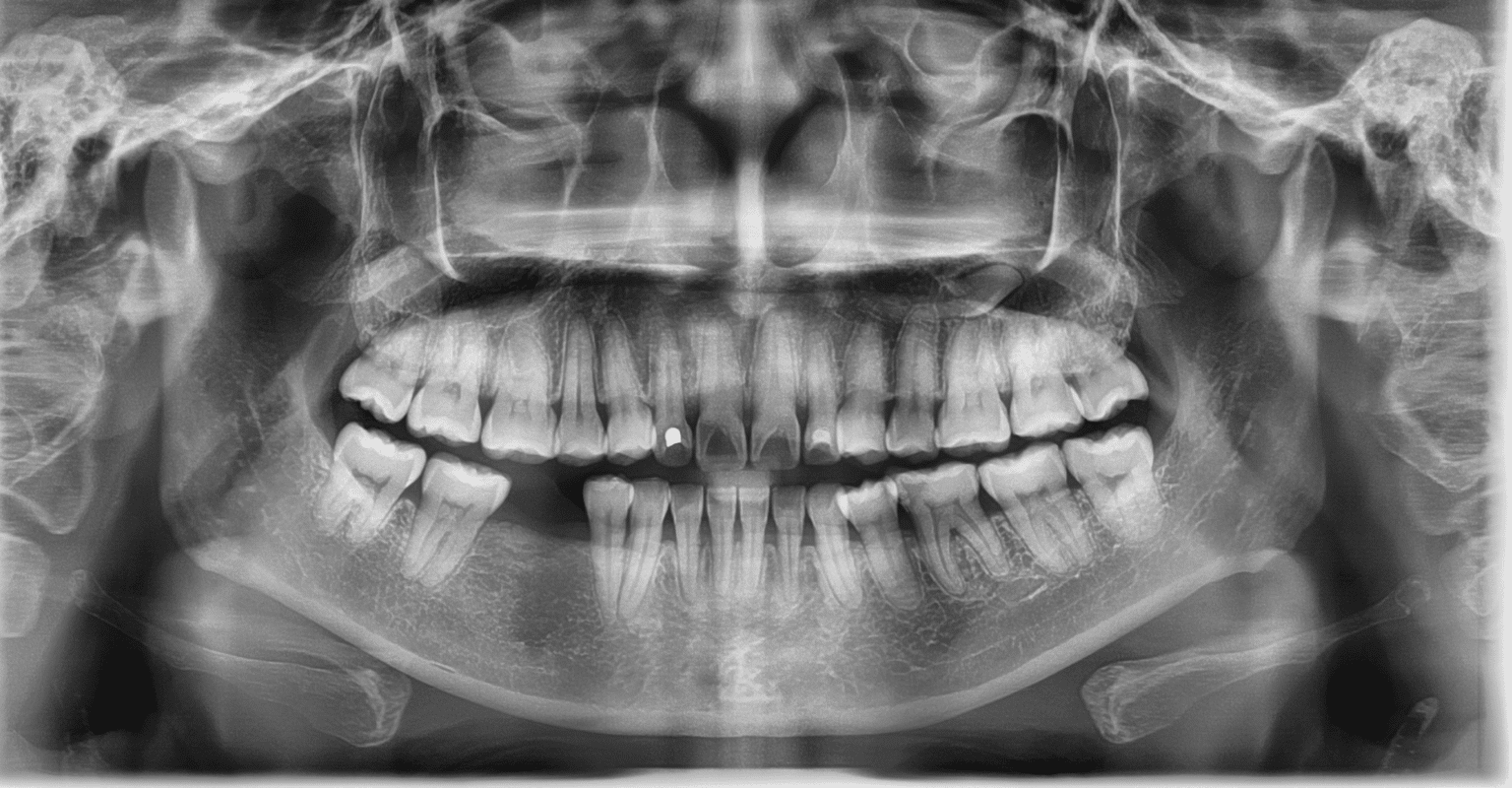
X-rays show what an exam can’t: decay between teeth, infection at the root tip, bone levels and teeth that haven’t come in. Finding these early keeps treatment simpler.
At Dental Faith, digital sensors capture images in seconds with lower radiation than film. Dr. M. Paula Fedler reviews them with you on screen, in English or Spanish.
X-ray type | What it shows | When it’s used |
Bitewing | Back teeth from crown to bone level, upper and lower together | Checkups, to find cavities between teeth |
Periapical | One or two whole teeth, including the root tip | Toothache, infection, before an extraction |
Full-mouth series | Every tooth and root (about 18 images) | New patients, gum disease checks |
Panoramic | The entire jaw, all teeth, sinuses and jaw joints in one image | Wisdom teeth, extractions, orthodontic and implant planning |
From routine checkup imaging to pre-treatment diagnostics, we have the tools to give you a full and accurate picture of your oral health.
Decay often starts where teeth touch, out of sight. Bitewings catch it while a small filling can fix it.
A dark area at the root tip can mean infection, even before it hurts.
X-rays show how much bone supports each tooth, which tells us whether gum disease is present.
We use a small camera to take detailed photos inside your mouth. These work alongside X-rays to give us a complete picture of your oral health.
When X-rays show a need for restorative work, our digital impressions make the next step faster and more comfortable. No messy molds needed.
Smiles transformed
Google reviews
English & Spanish
Appointments available
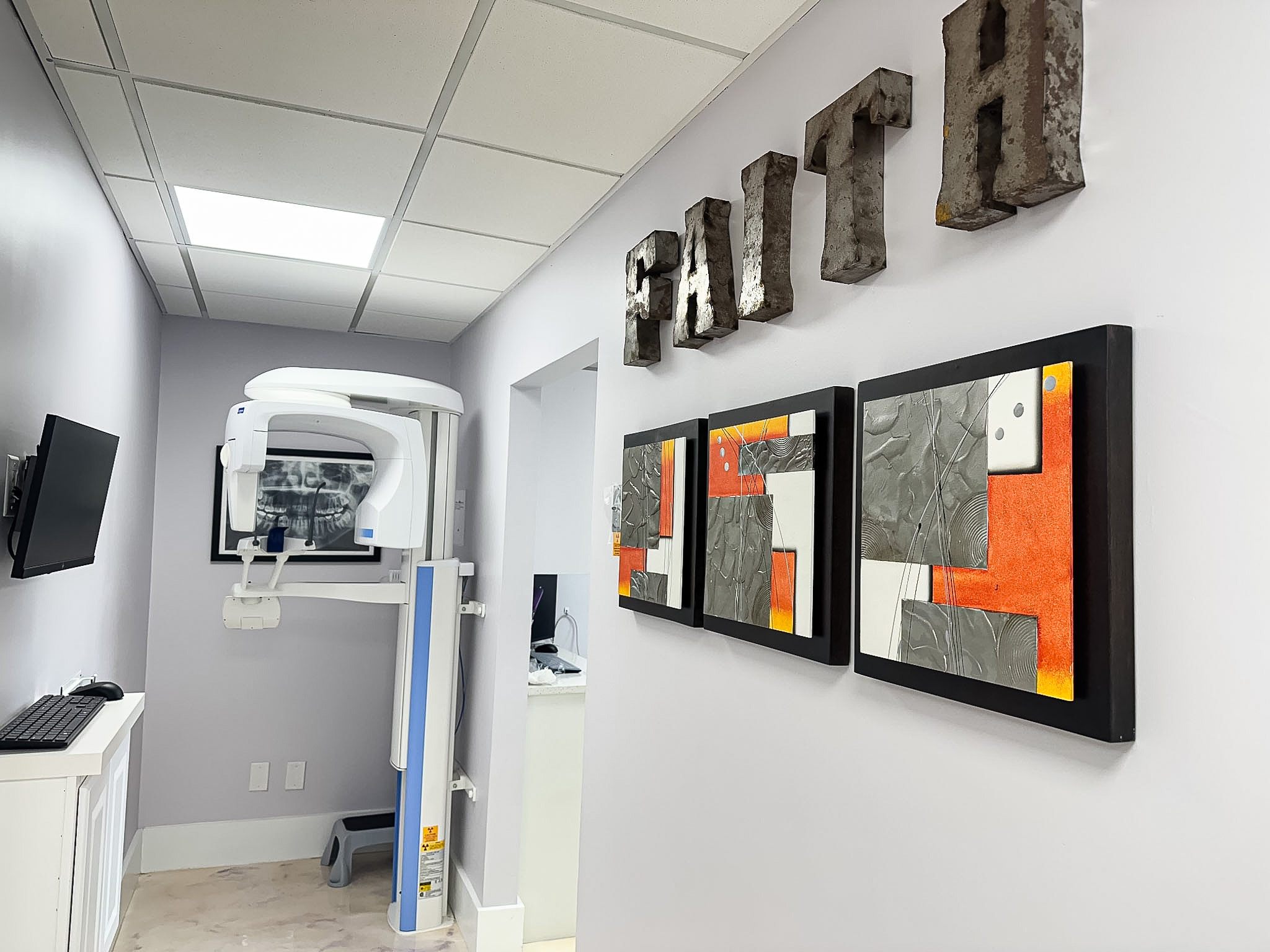
A Nashville Dental Office With Better Imaging Technology
We do not guess. We use digital X-rays to see exactly what is happening so we can give you the right treatment every time. No delays, no film, no extra wait.
Digital sensors need less radiation than traditional film.
Images appear on the screen in seconds, so there's no development wait and no retakes for faded film.
We enlarge the image and point out exactly what we found.
We follow ADA guidance and base how often you need X-rays on your own risk, not on a fixed calendar.
Digital images can be sent securely to a specialist or your next dentist.
Not sure what to expect? Here is exactly what happens when you come in for digital dental X-rays at Dental Faith in Nashville.
Tell us if you’re pregnant or have had recent X-rays elsewhere. We may be able to use those instead.
A small, smooth sensor is placed in your mouth. Panoramic images use a machine that circles your head, with nothing in your mouth.
Each image takes less than a second.
Dr. Fedler shows you the images and explains what they mean.
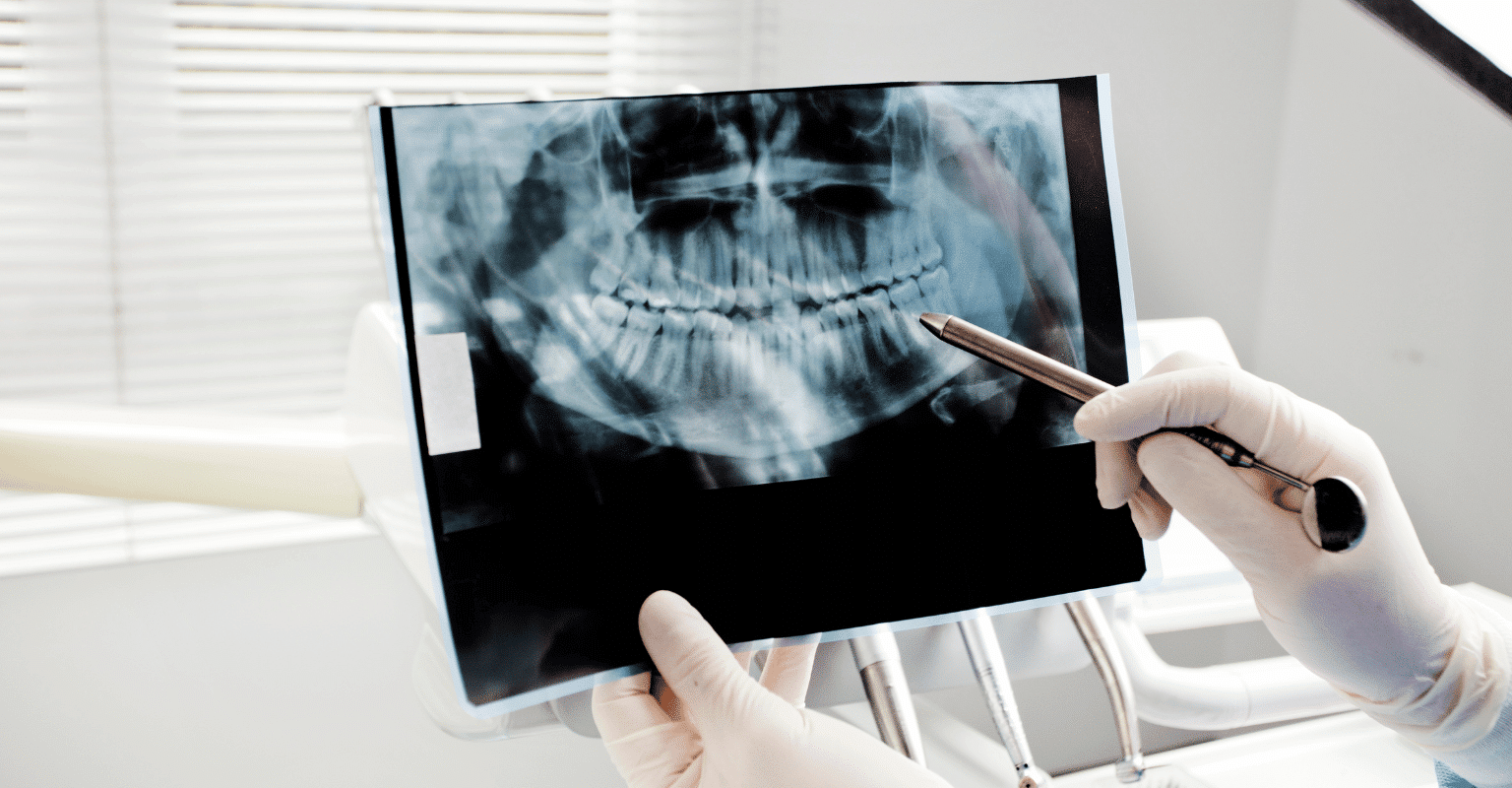
Image | Without insurance | With insurance |
Bitewings (2-4 images) | [CONFIRM price] | Usually covered as preventive |
Single periapical | [CONFIRM price] | Usually covered |
Full-mouth series | [CONFIRM price] | Usually covered every 3-5 years |
Panoramic | [CONFIRM price] | Usually covered every 3-5 years |
New-patient special (exam + X-rays + intraoral photos) | [CONFIRM price] | Uninsured patients only |


 Trustindex verifies that the original source of the review is Google.
 Trustindex verifies that the original source of the review is Google.
 Trustindex verifies that the original source of the review is Google.
 Trustindex verifies that the original source of the review is Google.
 Trustindex verifies that the original source of the review is Google.
 Trustindex verifies that the original source of the review is Google.
 Trustindex verifies that the original source of the review is Google.
 Trustindex verifies that the original source of the review is Google.
 Trustindex verifies that the original source of the review is Google.
 Trustindex verifies that the original source of the review is Google.
Our team is a trusted dental office in Nashville. Contact us today!
Yes. The dose from dental X-rays is very small. A set of four bitewings is roughly equal to the natural background radiation you receive in about a day. Following current ADA recommendations, we take X-rays only when they’re needed for your care, and we use digital sensors to keep the dose low.
Pregnant? Tell us. X-rays can still be taken when needed for urgent care, but routine images are often postponed.
The ADA recommends basing the schedule on your risk, not the calendar:
You can also send us a quick text message at (615) 285-3949.
We look forward to hearing from you soon!
Yes. The dose is very small, roughly a day’s worth of natural background radiation for a set of bitewings. We take X-rays only when they’re needed for your care.
The ADA’s 2023 recommendations say lead aprons and thyroid collars generally aren’t needed with modern equipment, because they can block the image and add little protection. We’re happy to provide one if you’d like.
It depends on your risk. Adults with healthy teeth may need bitewings every two to three years; people with frequent cavities need them more often.
X-rays needed for dental treatment can be taken safely during pregnancy. Routine images are often postponed. Tell us if you’re pregnant.
A bitewing is a close-up of back teeth that shows cavities between them. A panoramic image shows the entire jaw in one picture and is used for wisdom teeth and treatment planning.
Often, yes, if they’re recent and clear. Ask your previous office to send them to info@dentalfaith.com before your visit.
Call our Nashville dentist, Dr. M. Paula Fedler, today to book your next dental appointment.