
Dentures with Dental Implants: Complete Guide for Nashville
If you wear traditional dentures and are tired of them slipping, clicking, or limiting what you can eat, you are not alone. Many Nashville patients are making the switch to implant-supported dentures and never looking back.
This guide covers everything you need to know about dentures with dental implants in Nashville, including types, costs, the treatment process, and how to find the right provider.
What Are Implant-Supported Dentures?
Implant-supported dentures are a type of tooth replacement that combines dental implants with a full set of artificial teeth. Instead of resting on your gums like traditional dentures, they attach to small titanium posts that are surgically placed into your jawbone.
The result is a much more stable, comfortable, and natural-feeling solution. Your teeth do not shift, slip, or need adhesive. You eat, speak, and smile with real confidence.
Traditional dentures sit on top of the gums and rely on suction or paste to stay in place. Implant dentures are anchored directly to your jaw, which makes all the difference.
Types of Implant Dentures Available in Nashville
There are two main types of implant-supported dentures. Your dentist will help you decide which one fits your needs and budget.
All-on-4 and All-on-X (Fixed Dentures)
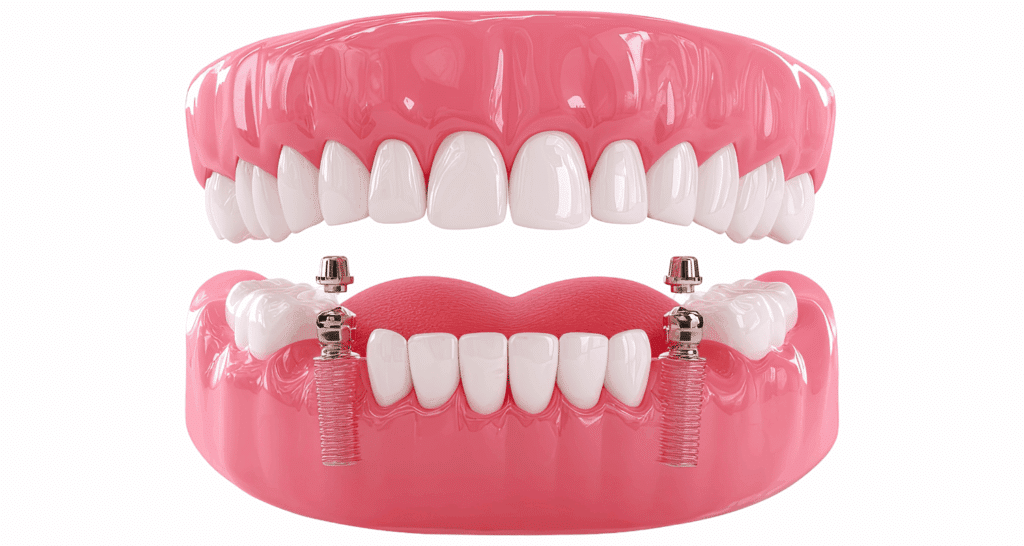
All-on-4 is one of the most popular options for patients who want a permanent, fixed solution. Four dental implants are placed in strategic positions in the jaw to support a full arch of teeth. The result feels and functions very close to natural teeth.
Some Nashville practices offer a “teeth in a day” approach with this method. You come in, have implants placed, and leave with a full set of working teeth on the same day. A permanent set is fitted after the healing period.
All-on-X follows the same concept but uses more implants, sometimes six or more, for added support. This is ideal for patients with lower bone density.
Snap-In Dentures (Removable Implant Dentures)
Snap-in dentures, sometimes called overdentures, click onto two to four implants using special attachments. They are more stable than traditional dentures but can be removed at night for cleaning.
This option tends to cost less than All-on-4 and is a good middle ground for patients who want more security than traditional dentures but are not ready for a fully fixed solution.
Benefits of Dentures with Dental Implants
Patients who switch from traditional dentures to implant-supported dentures often say it changes their quality of life significantly. Here is why:
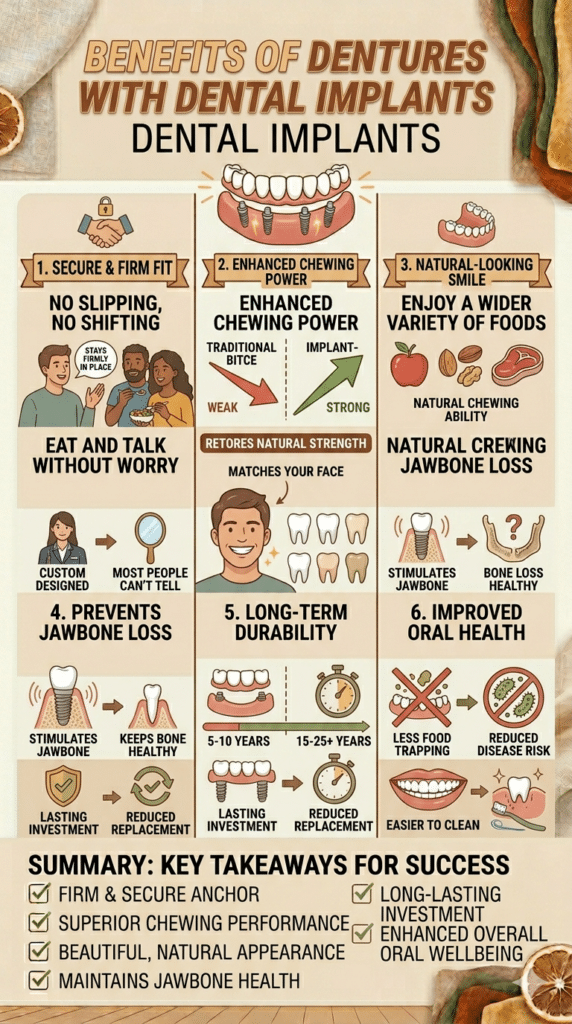
No slipping or shifting. Implant dentures stay firmly in place while you eat and talk. You do not have to worry about them moving at awkward moments.
Better chewing ability. Traditional dentures reduce your biting force significantly. Implant dentures restore much more of your natural chewing strength, allowing you to enjoy more foods.
Natural appearance. The teeth are designed to match the shape, size, and color that suits your face. Most people cannot tell the difference.
Prevents bone loss. When teeth are missing, the jawbone shrinks over time because there is no root to stimulate it. Dental implants act like tooth roots and keep the bone healthy.
Long-term durability. With proper care, implants can last 15 to 25 years or longer. Traditional dentures typically need replacing every 5 to 10 years.
Better oral health overall. Implants are easier to keep clean than dentures that trap food under them. You can learn more about the link between dental implants and gum disease to understand what conditions may affect your candidacy.
Who Is a Good Candidate?
Most adults with missing or failing teeth are candidates for implant dentures. Ideal candidates generally:
- Have lost most or all of their teeth in one or both arches
- Have enough jawbone density to support implants (or can build it up with a bone graft)
- Are in good general health
- Do not smoke, or are willing to quit during healing
- Are frustrated with traditional dentures
- Want a long-term solution rather than a temporary fix
If you have gum disease, it will need to be treated before implants are placed. A periodontal therapy appointment can get your gum health in order first.
Patients with severe bone loss may still qualify after a bone graft procedure. Your dentist will evaluate this during your consultation.
Step-by-Step Process at Nashville Dental Clinics
Getting implant dentures is not a one-visit procedure. Here is what the process looks like from start to finish.
Step 1: Consultation and 3D Imaging
Your dentist reviews your medical and dental history, examines your mouth, and takes 3D scans or X-rays of your jaw. This shows exactly how much bone is available and where implants can be placed safely. A custom treatment plan is created for you.
Step 2: Tooth Extraction or Bone Grafting (If Needed)
Any failing or damaged teeth are removed. If your jawbone is not thick or tall enough to hold implants, a bone graft may be needed first. This adds healing time but makes the final result much more secure.
Step 3: Implant Placement Surgery
The dentist makes small incisions in the gum and places the titanium implant posts into the jawbone. Local anesthesia or sedation is used so you feel little to no pain. With All-on-4, temporary teeth are often attached the same day.
Step 4: Healing Period (Osseointegration)
Over the next 3 to 6 months, the implants fuse with the jawbone in a process called osseointegration. This is what makes them so stable. During this time, you wear a temporary prosthesis.
Step 5: Final Denture Placement
Once healing is complete, your custom-made permanent denture is attached to the implants. Your dentist checks your bite, fit, and appearance and makes final adjustments. You leave with your permanent new smile.
Cost of Implant Dentures in Nashville (2026 Guide)
Cost is one of the first things patients ask about, and that is completely fair. Here are general price ranges for Nashville:
| Treatment Type | Estimated Cost Per Arch |
| Snap-in dentures | $6,000 to $15,000 |
| All-on-4 implants | $15,000 to $30,000 or more |
| Bone graft (if needed) | $500 to $3,000 |
Several factors affect the total cost:
- Number of implants needed
- Whether extractions or bone grafts are required
- The type of final restoration (acrylic vs. zirconia teeth)
- The experience and technology of the dental practice
Most dental insurance plans do not fully cover implant procedures, but many Nashville dental offices offer financing options or payment plans. Investing in implant dentures can save money long term because they last much longer than traditional dentures.
If you are exploring your options, dental implants are a well-established treatment with decades of research behind them.
Implant Dentures vs. Traditional Dentures
| Feature | Traditional Dentures | Implant Dentures |
| Stability | Low | High |
| Comfort | Moderate | High |
| Bone loss | Continues over time | Prevented |
| Chewing strength | Reduced | Near normal |
| Lifespan | 5 to 10 years | 15 years or more |
| Adhesive needed | Yes | No |
| Cost upfront | Lower | Higher |
| Long-term value | Lower | Higher |
Traditional dentures are a valid option for patients who cannot have surgery or need a lower-cost solution. But for patients who want the closest thing to natural teeth, implant dentures are far superior. You can explore partials and dentures to compare all available options.
Risks and Downsides to Know
Implant dentures are an excellent treatment, but they are not without drawbacks.
Higher upfront cost. The initial investment is significantly more than traditional dentures. However, the long-term cost often evens out because implants last much longer and require fewer replacements.
Surgery is required. Implant placement is a surgical procedure. While it is performed safely every day in dental offices, it does carry some risk, including infection, nerve sensitivity, or implant failure in rare cases.
Healing takes time. The osseointegration period means you will be working with temporary teeth for several months before receiving your final restoration.
Not everyone qualifies immediately. Patients with severe bone loss, uncontrolled diabetes, or active gum disease may need additional treatment before they can proceed.
How to Choose the Right Implant Dentist in Nashville
Not all dental practices offer implant services, and experience matters a great deal with this procedure. When looking for a provider in Nashville, consider:
Experience with implants. Ask how many implant procedures the dentist has completed and how long they have been placing implants.
Technology used. Look for a practice that uses 3D imaging and digital planning. This leads to more accurate placement and better outcomes.
Before and after photos. A confident dentist will be happy to show you real patient results.
Patient reviews. Read what other patients say about the experience, communication, and results.
Emergency support. Things can come up during the healing process. Choose a practice that offers follow-up care and can see you quickly if needed. Dental Faith offers emergency dental services for exactly these situations.
According to the American Academy of Implant Dentistry, dental implants have a success rate of over 95 percent when placed by an experienced provider and cared for properly.
Top Questions to Ask Your Nashville Dentist
Before committing to treatment, bring these questions to your consultation:
- Am I a good candidate based on my bone density and health?
- How many implants will I need for my specific situation?
- What is the total cost including extractions, grafts, and the final restoration?
- Will I have temporary teeth during healing?
- How long will the entire process take?
- What happens if an implant does not integrate properly?
Recovery and Aftercare
Recovery after implant surgery is manageable for most patients. The first few days involve some swelling, soreness, and a soft food diet. Most patients return to normal activity within a week.
During the healing period:
- Brush gently around the implant sites
- Avoid hard, crunchy, or very hot foods
- Attend all follow-up visits so your dentist can monitor healing
- Do not smoke, as this significantly reduces implant success rates
Once your permanent denture is placed, care is simple. Brush twice daily, clean under and around the denture, and schedule regular dental cleanings every six months. The American Dental Association recommends consistent oral hygiene and professional checkups to keep implants healthy for life.
Are Implant Dentures Worth It?
For most patients, yes. The improvement in daily life is significant. You eat the foods you love, speak clearly, and smile without worry. You do not deal with denture adhesive, slipping, or the ongoing cost of replacements.
Implant dentures are an investment in your long-term health and confidence. When you factor in the lifespan, functionality, and the bone preservation benefit, the value is clear.
Frequently Asked Questions
How much do implant dentures cost in Nashville?
Snap-in dentures range from $6,000 to $15,000 per arch. All-on-4 implants typically run $15,000 to $30,000 or more per arch depending on the complexity of your case.
What is the downside of implant dentures?
The main downsides are the higher upfront cost, the surgical procedure involved, and the healing time of several months before the final restoration is placed.
Are implant-supported dentures permanent?
Fixed options like All-on-4 are considered permanent and are not removed daily. Snap-in dentures are removable but still anchored by implants for much better stability than traditional dentures.
How long do dental implants last?
With proper care, dental implants can last 20 to 25 years or even a lifetime. The denture itself may need to be replaced or updated after 10 to 15 years.
Can I get teeth in a day in Nashville?
Yes. The All-on-4 method allows temporary teeth to be placed the same day as your implant surgery. Your final permanent restoration is fitted after the healing period is complete.
If you are ready to stop living with uncomfortable or unstable dentures, Dental Faith in Nashville is here to help. Our team will evaluate your situation, walk you through your options, and help you find a solution that fits your life and budget. Schedule your consultation today and take the first step toward a smile that feels and functions like your own.