


What Do Dentists Do with Cavities? Nashville Patient Guide
If you have tooth pain or your dentist found a cavity at your last visit, you are not alone. Cavities are one of the most common dental problems in the country. The good news is that treating a cavity is simple, quick, and much more comfortable than most people expect.
This guide explains exactly what Nashville dentists do with cavities, what to expect during treatment, and how to avoid them in the future.
How Do Dentists in Nashville Treat Cavities?
The short answer: dentists remove the decayed part of the tooth, clean the area, and fill it to restore the tooth’s function and prevent further damage.
The process is straightforward and usually takes less than an hour. Most patients feel little to no pain during treatment because of modern numbing techniques.
Step-by-Step Cavity Treatment Process
Here is exactly what happens when you go in for cavity treatment in Nashville.
Step 1: Dental Exam and X-Rays Your dentist starts by examining your teeth. They use a small mirror and a dental probe to check for soft spots or discoloration. X-rays help them see decay that is hidden between teeth or below the gum line. This tells them how deep the cavity is and what treatment you need.
Step 2: Numbing the Area Before any work begins, your dentist applies a local anesthetic to numb the tooth and the area around it. You may feel a small pinch from the needle, but after that, you should feel no pain during the procedure.
Step 3: Removing the Decay Your dentist uses a dental drill or, in some cases, a laser to remove the decayed tissue. Only the damaged part is removed. Healthy tooth structure is left intact.
Step 4: Cleaning the Tooth Once the decay is gone, the dentist cleans the area to remove any remaining bacteria. This step is important to stop the cavity from spreading.
Step 5: Filling the Cavity The dentist places the filling material into the cleaned tooth. The material is shaped to match your natural tooth. A special curing light hardens the filling in seconds.
Step 6: Polishing and Finishing Finally, the dentist smooths and polishes the filling. They check your bite to make sure everything feels right. The whole process is done.
Regular dental cleanings in Nashville can catch cavities early before they need more complex treatment.
Types of Cavity Fillings in Nashville
Not all fillings are the same. Your dentist will recommend a material based on the location of the cavity, your budget, and your preferences.
Composite (Tooth-Colored) Fillings These are the most popular type. They are made of a resin material that matches your natural tooth color. You cannot tell they are there. Composite fillings work well for visible teeth and are a great choice for most patients. Learn more about types of dental fillings to see which one fits your needs.
Silver Amalgam Fillings Amalgam fillings are very durable and have been used for decades. They are silver in color, which makes them more visible. They are often used for back teeth where strength matters more than appearance.
Ceramic (Porcelain) Fillings These fillings are strong and look very natural. They are a good option if you want a long-lasting, natural-looking result. They tend to cost more than composite or amalgam options.
Glass Ionomer Fillings This material releases fluoride over time, which helps protect the tooth from future decay. It is often used for children or for cavities near the gum line.
Early Cavity Treatment Options (No Drill Needed)
Not every cavity requires a filling. If your dentist catches decay very early, there are gentler options.
Fluoride Treatments A professional fluoride treatment can stop early-stage decay and help your enamel recover. This only works when the cavity is caught before it creates a hole in the tooth.
Remineralization Some clinics offer products that help strengthen enamel and reverse early decay. This is a newer approach that works best on very small cavities.
Dental Sealants Sealants are a thin coating applied to the chewing surfaces of back teeth. They block food and bacteria from getting into grooves where cavities often form. You can learn about the difference between a dental sealant and a filling to understand which one you might need.
When a Filling Is Not Enough
Sometimes a cavity is too large or too deep for a simple filling. In those cases, your dentist may recommend:
Dental Crowns If the decay has destroyed a large portion of the tooth, a crown covers and protects what remains. Crowns are custom-made to fit over your tooth and restore its shape and strength.
Root Canal Treatment If the decay reaches the inner pulp of the tooth, a root canal becomes necessary. The dentist removes the infected tissue, cleans the root, and seals it. A crown is then placed on top. Many patients worry about root canals, but modern root canal treatment is not painful and can save a tooth that would otherwise need to be removed.
Does Cavity Treatment Hurt?
This is the most common concern patients have. The honest answer is: not really.
Modern dental anesthetics are very effective. By the time your dentist starts removing decay, the area is fully numb. You may feel pressure or vibration, but pain is rare.
After the procedure, your mouth may feel sore for a day or two once the numbness wears off. Over-the-counter pain relievers handle this easily. Most patients go back to their normal routine the same day.
Cost of Cavity Treatment in Nashville
Here are general cost ranges for cavity treatment in Nashville:
| Treatment | Estimated Cost |
| Basic filling (amalgam) | $100 to $400 |
| Composite filling | $150 to $600 |
| Ceramic filling | $250 to $800 |
| Dental crown | $800 to $1,500 or more |
| Root canal | $800 to $2,000 or more |
Costs vary by clinic, the size of the cavity, and the filling material used. Most dental insurance plans cover fillings, at least in part. Without insurance, many Nashville dental offices offer payment plans or financing options.
Catching a cavity early keeps costs low. A small filling costs far less than a crown or root canal.
How Long Does It Take to Fix a Cavity?
A single small cavity usually takes 20 to 40 minutes to treat. If you have multiple cavities, your dentist may spread the work across a couple of visits, which can take 1 to 2 hours total.
Getting a crown takes two visits since the crown is custom-made at a dental lab. Some practices in Nashville offer same-day crowns with on-site milling technology.
How to Prevent Cavities
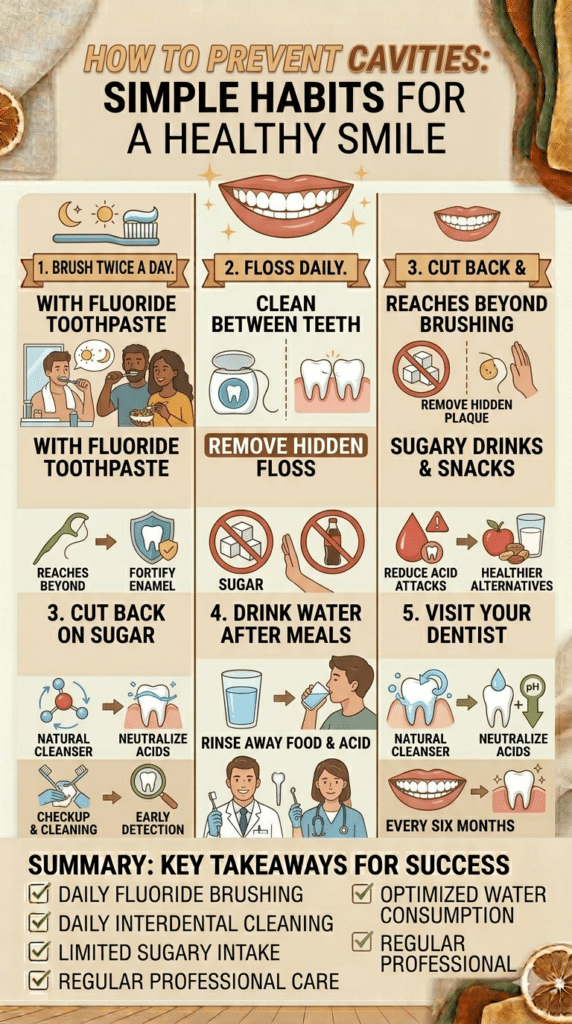
Prevention is always easier than treatment. Here are simple habits that protect your teeth:
- Brush twice a day with fluoride toothpaste
- Floss daily to clean between teeth where your brush cannot reach
- Cut back on sugary drinks and snacks
- Drink water after meals to rinse away food and acid
- Visit your dentist every six months for a checkup and cleaning
According to the American Dental Association, regular dental visits are one of the best ways to catch dental cavities early and avoid costly treatment later.
The benefits of regular dental cleanings go beyond just clean teeth. Your dentist can spot problems before they get serious.
When Should You See a Dentist?
Do not wait for pain to become unbearable. See a dentist if you notice:
- Tooth pain or aching that does not go away
- Sensitivity to hot, cold, or sweet foods
- A visible hole or dark spot on a tooth
- Persistent bad breath
- Pain when biting or chewing
Cavities grow over time. A small cavity that takes 30 minutes to fill today could turn into a root canal or extraction if ignored for months.
If you are dealing with sudden or severe tooth pain, a Nashville emergency dentist can see you quickly and get you relief fast.
Choosing a Dentist in Nashville for Cavity Treatment
When looking for a dentist in Nashville, keep these things in mind:
- Do they use modern equipment like digital X-rays?
- Are they accepting new patients?
- Do they offer payment plans?
- Do they have good patient reviews?
- Can they handle dental emergencies?
Finding the best dentist near Nashville is easier when you know what to look for. A good dental office will make you feel comfortable, explain your options clearly, and never rush your care.
Frequently Asked Questions
u003cstrongu003eWhat do dentists do when they find a cavity?u003c/strongu003e
They remove the decay, clean the tooth, and fill it with a material like composite resin or amalgam to restore the tooth.
u003cstrongu003eDo cavities always need fillings?u003c/strongu003e
Not always. Very early cavities can sometimes be treated with fluoride or remineralization. But once a hole forms, a filling is needed.
u003cstrongu003eHow much does a filling cost in Nashville?u003c/strongu003e
Basic fillings range from $100 to $400. Tooth-colored composite fillings typically run $150 to $600 depending on the size and location.
u003cstrongu003eIs cavity treatment painful?u003c/strongu003e
No. Local anesthesia keeps the area numb throughout the procedure. Most patients feel only mild soreness afterward.
u003cstrongu003eCan a cavity go away on its own?u003c/strongu003e
Early enamel damage can sometimes be reversed with fluoride. Once a cavity forms a hole, it will not heal on its own and needs treatment.
If you think you have a cavity or it has been more than six months since your last checkup, do not put it off. The sooner a cavity is treated, the simpler and less expensive the fix will be. According to the Centers for Disease Control and Prevention, untreated cavities are one of the most common chronic health conditions in the United States and are entirely preventable with the right care.