
Endodontist vs Oral Surgeon: What’s the Difference and Who Should You See?
When your dentist says you need a specialist, it can feel confusing. Two names come up often: endodontist and oral surgeon. They both work on teeth, but they do very different things. Knowing the difference helps you make a better decision about your care.
What Is an Endodontist?
An endodontist is a dental specialist focused on the inside of your teeth. The word “endo” means inside. They treat the pulp, which is the soft tissue and nerves inside each tooth.
After dental school, endodontists go through 2 to 3 more years of specialty training. They learn how to handle complex tooth infections, injuries, and root problems.
Common procedures an endodontist performs:
- Root canal treatment
- Root canal retreatment
- Apicoectomy (removing the tip of a tooth root)
- Treatment for dental trauma
- Abscess treatment
Their main goal is simple: save your natural tooth.
If you have deep tooth pain, an infected tooth, or a crack that has reached the root, an endodontist is often your first call. You can learn more about root canal treatment and how it works before your appointment.
What Is an Oral Surgeon
An oral surgeon handles bigger problems. They are trained to perform surgery on the mouth, jaw, and face. Their full title is often “oral and maxillofacial surgeon.”
Oral surgeons complete 4 to 6 years of extra training after dental school. Much of that training happens in a hospital setting, which is why they can use general anesthesia.
Common procedures an oral surgeon performs:
- Tooth extractions, including wisdom teeth
- Dental implant placement
- Bone grafts
- Jaw surgery
- Facial trauma treatment
- Cleft palate repair
- Tumor and cyst removal
If your tooth cannot be saved, or if your problem goes beyond the tooth itself, an oral surgeon is who you need.
The Core Difference: Saving vs. Removing Teeth
Here is the simplest way to understand it:
Endodontist = saves teeth. Oral surgeon = removes or repairs.
This is a general rule, not an absolute one. But it gives you a solid starting point when deciding who to see.
An endodontist works inside your tooth using tiny tools and microscopes. An oral surgeon works on a larger scale, often dealing with bone, soft tissue, and the jaw structure.
When to See an Endodontist
You should see an endodontist when your tooth still has a chance of being saved. Signs you may need one include:
- Severe or constant tooth pain
- Pain that spreads to your jaw or ear
- A tooth that is sensitive to heat or cold for a long time
- A cracked tooth that has not broken off
- A visible abscess or pimple on your gum
- Deep decay that has reached the nerve
The most common reason people see an endodontist is for a root canal. Many patients worry about this procedure. But modern root canals are not painful. They actually stop the pain caused by an infected tooth.
If you have had a root canal before and the pain returned, you may need root canal retreatment. An endodontist handles that too.
When to See an Oral Surgeon
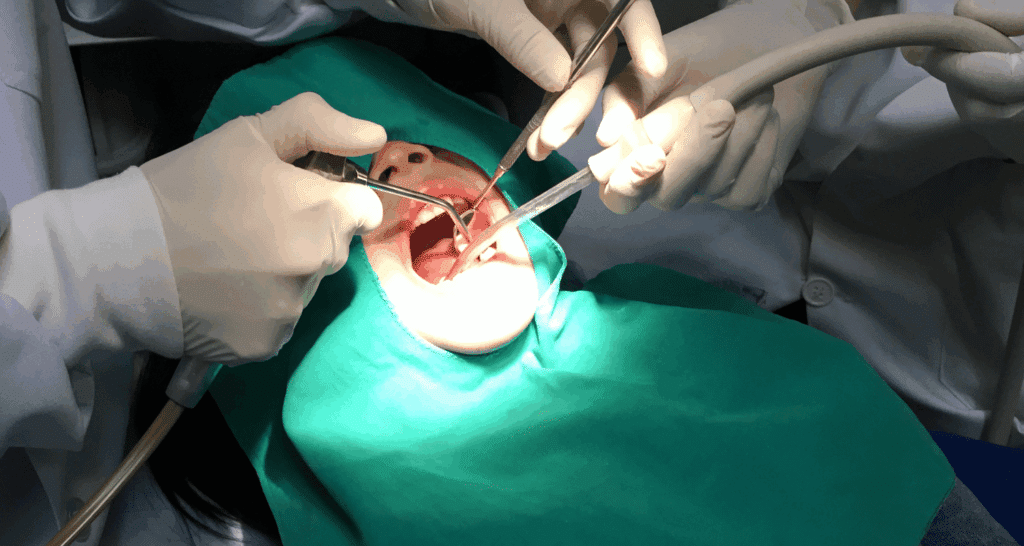
You should see an oral surgeon when the tooth cannot be saved, or when the issue is bigger than the tooth itself.
Common reasons to see an oral surgeon include:
- Impacted wisdom teeth causing pain or crowding
- A tooth that is too damaged or decayed to repair
- Need for dental implants after a tooth is lost
- Jaw pain or alignment problems
- A broken jaw from an injury
- Infection that has spread into the bone
If you have a severely cracked or broken tooth, your dentist will help decide if it can be saved or needs removal. Sometimes the damage is too deep, and extraction is the safer option.
Procedures Comparison
| Procedure | Endodontist | Oral Surgeon |
| Root canal | Yes | Rarely |
| Root canal retreatment | Yes | No |
| Apicoectomy | Yes | No |
| Tooth extraction | No | Yes |
| Wisdom teeth removal | No | Yes |
| Dental implants | No | Yes |
| Bone grafts | No | Yes |
| Jaw surgery | No | Yes |
Cost Comparison
Costs vary based on location, insurance, and the complexity of your case. Here are general ranges:
- Root canal (endodontist): $800 to $3,000
- Simple tooth extraction: $150 to $800
- Surgical extraction: $1,000 or more
- Dental implant: $3,000 to $6,000 or more
Most dental insurance plans cover both endodontic and oral surgery procedures to some degree. Coverage depends on your specific plan and the procedure needed. Always check with your provider before scheduling.
In many cases, saving a tooth with a root canal costs less than extracting it and replacing it with an implant. When you factor in the cost of dental implants, saving your natural tooth is often the better financial choice long term.
Root Canal vs. Extraction: Which Is Better?
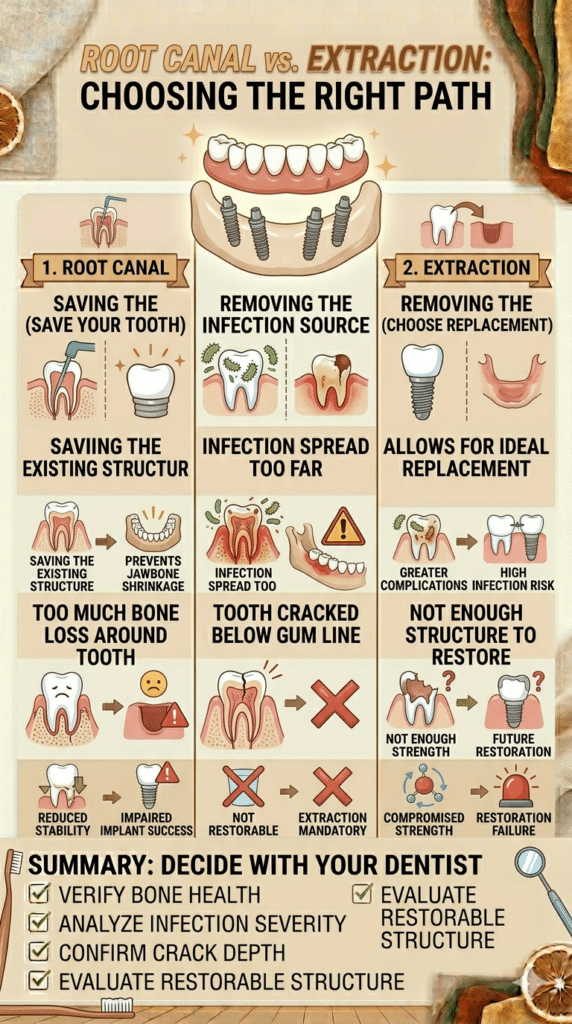
Saving your natural tooth is almost always the preferred option. Natural teeth are stronger and more functional than any replacement.
But sometimes, extraction is the right call. This includes situations where:
- The tooth has too much bone loss around it
- The infection has spread too far
- The tooth is cracked below the gum line
- There is not enough tooth structure left to restore
If your tooth must come out, a dental extraction can be done safely. And if you want to replace it later, dental implants are a great long-term option.
According to the American Association of Endodontists, millions of teeth are saved each year through root canal treatment, which allows patients to keep their natural teeth for life.
Can You Need Both Specialists?
Yes. Some cases require both an endodontist and an oral surgeon.
For example, an endodontist may try to save a badly infected tooth. If the treatment does not work, the tooth may still need to come out. At that point, the oral surgeon steps in to extract it and possibly place an implant.
Your general dentist coordinates your care and refers you to the right specialist at the right time.
Recovery Differences
Recovery after seeing an endodontist is usually mild. Most patients feel sore for a day or two and then return to normal. Since root canals are not major surgery, there is little downtime.
Recovery after oral surgery takes longer. Extractions and implant placements involve cutting tissue and sometimes bone. Swelling, soreness, and limited diet are common for several days.
If you have a toothache or a dental emergency, getting treatment quickly leads to a faster and easier recovery no matter which specialist you see.
Common Misconceptions
“Oral surgeons do root canals.” Rarely. Endodontists are the specialists trained for this procedure.
“Root canals are extremely painful.” This is outdated thinking. Modern root canals use strong local anesthesia. Most patients say the procedure feels no worse than getting a filling.
Which Specialist Should You Choose?
Here is a simple guide:
- Tooth can be saved → See an endodontist
- Tooth must come out → See an oral surgeon
- Not sure? → Start with your general dentist
Your dentist will examine your tooth, take X-rays, and point you in the right direction. You do not have to figure this out alone.
If you are dealing with tooth pain, do not wait. Early treatment almost always means less pain, lower cost, and better results. The American Dental Association recommends regular checkups to catch problems before they require specialist care.
Frequently Asked Questions
Will an oral surgeon do a root canal?
Only in rare cases. Root canals are typically done by endodontists or general dentists.
Is an endodontist better for root canals?
Yes. Endodontists have advanced training specifically for root canal procedures and complex cases.
Who should I see for tooth pain?
Start with your general dentist. They will refer you to the right specialist if needed.
Is it better to pull a tooth or get a root canal?
Saving your natural tooth is usually the better choice. Extraction should be a last resort.
Why is a root canal expensive?
It requires specialized training, advanced equipment, and multiple steps to complete safely.
If you are in the Nashville area and are not sure where to start, finding the right dental care near you is the first step toward relief. A good dentist will guide you to the right specialist and make the process as simple as possible.