How Do I Choose the Right Dental Floss?
Walk into any pharmacy in Nashville and you will find an entire shelf of floss options. Waxed, unwaxed, tape, picks, water flossers. It can feel confusing fast. The good news is there is no single “best” floss for everyone. The right floss is simply the one that works for your teeth and that you will actually use every day. This guide helps you figure out exactly that.
Why Choosing the Right Dental Floss Matters
Brushing alone does not clean between your teeth. Plaque and food get trapped in those spaces and cause decay and gum disease over time. Flossing once a day clears out what your toothbrush cannot reach.
If you want to protect your gums and avoid bigger dental problems, regular flossing is one of the easiest things you can do. It pairs directly with the preventive dental care that Dental Faith recommends for every patient.
Is There One “Best” Dental Floss?
No. There is no floss that works perfectly for everyone.
The best floss is the one you are comfortable using and will stick with. If mint flavor makes you more likely to floss, use mint. If a floss pick is easier than string, use that. Consistency matters more than which brand or type you pick.
Types of Dental Floss Explained
Waxed vs Unwaxed Floss
Waxed floss has a thin coating that helps it slide between tight teeth more easily. Unwaxed floss has more grip and may squeak slightly against clean teeth, which some people find helpful as a sign plaque has been removed. Both work well. Choose based on what feels comfortable.
PTFE (Monofilament) Floss
This type is made from a single strong fiber. It does not shred or break easily. It glides between teeth smoothly, even in tight spaces. It costs a little more but lasts longer without fraying.
Dental Tape
Dental tape is flat and wider than regular floss. It works well for people with larger gaps between teeth or those who find regular floss too thin to handle comfortably.
Super Floss
Super floss has three components: a stiff end for threading, a spongy middle section, and regular floss. It is made for people with braces, bridges, or dental implants. It gets into spots that regular floss cannot reach easily.
Floss Picks and Holders
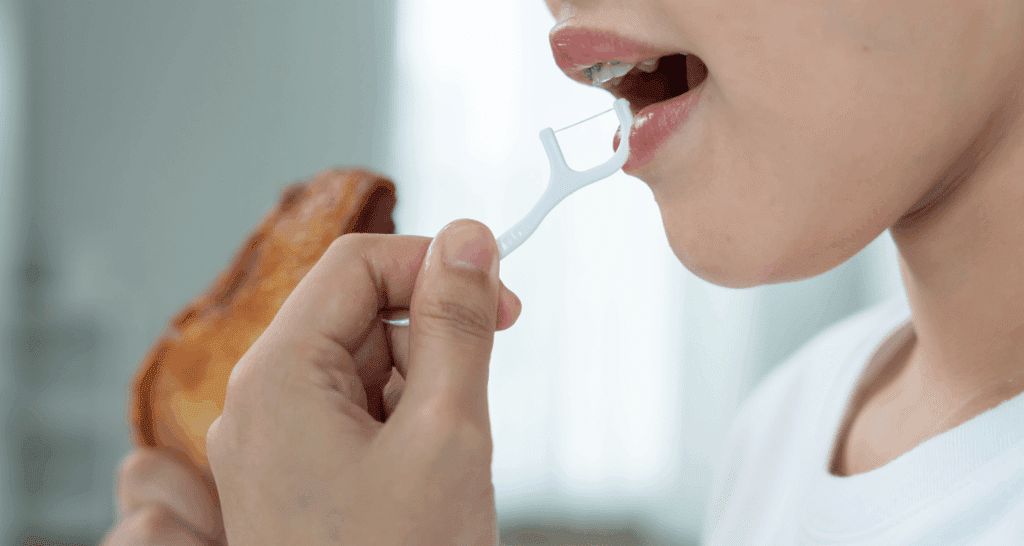
These are small plastic tools with a short piece of floss attached. They are easy to hold and great for people who struggle with wrapping floss around their fingers. Kids and older adults often find these easier to use.
Water Flossers
A water flosser shoots a stream of water between teeth to rinse out food and debris. It is a good option for people with braces or limited hand movement. However, it does not fully replace floss because it cannot remove plaque from tooth surfaces the way string floss can.
How to Choose the Right Floss for Your Needs
Use this simple table to find your best match.
| Your Situation | Best Floss Type |
| Teeth packed tightly together | Waxed or PTFE floss |
| Wide gaps between teeth | Dental tape |
| Braces or bridges | Super floss |
| Sensitive or bleeding gums | Soft or waxed floss |
| Low hand strength or dexterity | Floss picks or holders |
| Dental implants | Super floss or water flosser |
| Just starting out | Floss picks for ease |
Key Factors to Consider Before Choosing Floss
Before buying any floss, think through these points:
- Teeth spacing. Tight teeth need thin, slippery floss. Wide gaps do better with tape.
- Gum sensitivity. If your gums bleed or hurt easily, choose a softer or waxed option.
- Dental work. Braces, bridges, and implants need special floss like super floss.
- Ease of use. If regular floss frustrates you, try picks or a water flosser.
- ADA approval. Look for the American Dental Association seal on the package. This confirms the product has been tested for safety and effectiveness.
Common Mistakes People Make When Choosing Floss
Many people pick floss based on the brand name or price alone. That is not the best approach. Here are the most common mistakes:
- Choosing based on ads, not your actual needs. A popular brand may not suit tight or sensitive teeth.
- Ignoring comfort. If flossing hurts or the floss keeps breaking, you will stop doing it. Switch types.
- Skipping flossing altogether. Not flossing leads to plaque buildup that causes gum disease and cavities over time.
How to Floss Properly (Quick Guide)
Choosing the right floss only helps if you use it correctly. Here is how to do it:
- Use about 18 inches of floss. Wind most of it around your middle fingers.
- Hold a small section tight between your thumbs and index fingers.
- Slide the floss gently between two teeth.
- Curve it into a C shape around each tooth.
- Move it up and down against the tooth surface and just under the gum line.
- Use a clean section of floss for each tooth.
Never snap floss hard into your gums. Always use a slow, gentle motion.
Floss vs Water Flosser: Which Is Better?
Both have their place. Here is a quick comparison.
| Feature | String Floss | Water Flosser |
| Removes plaque | Yes | Partial |
| Cleans under gum line | Yes | Limited |
| Good for braces | With super floss | Yes |
| Easy to use | Takes practice | Very easy |
| Best use | Daily plaque removal | Supplement to flossing |
The best approach for most people is to use string floss daily and add a water flosser if you have braces, implants, or find flossing difficult. One does not fully replace the other.
When to Ask Your Dentist for Help
Sometimes choosing floss on your own is not enough. Talk to the Dental Faith team if:
- Your gums bleed regularly when you floss
- You are not sure what floss works with your dental work
- You have been told you have early gum disease and need a specific care routine
Not sure which floss is right for you? The Dental Faith team is happy to guide you at your next visit. Regular dental cleanings also remove plaque that even the best flossing routine leaves behind.
Call or text (615) 285-3949 or visit dentalfaith.com to book your visit. Located at 390 Harding Place, Suite 101, Nashville, TN 37211.
Frequently Asked Questions
What type of dental floss do dentists recommend?
Most dentists recommend any floss with the ADA seal. The best choice depends on your teeth spacing, gum health, and any dental work you have.
Is waxed or unwaxed floss better?
Neither is better overall. Waxed floss works well for tight teeth. Unwaxed floss gives more grip. Try both and use whichever feels right.
What floss is best for braces?
Super floss or floss threaders work best with braces. A water flosser can also help rinse around brackets.
Can I use a water flosser instead of floss?
A water flosser is a helpful add-on but does not fully replace string floss. String floss removes plaque more effectively from tooth surfaces.
Why does my floss keep breaking?
Your floss may be too thin for tight teeth, or there may be a rough edge on a filling or crown. Try PTFE floss, which resists shredding. If it keeps happening, mention it to Dr. Fedler.
How often should I floss my teeth?
Once a day is enough for most people. Floss before bed to remove the day’s buildup before you sleep.
What floss is best for sensitive gums?
A soft waxed floss or a gentle water flosser setting works well for sensitive gums. Avoid snapping the floss against the gum line.
Does flossing really make a difference?
Yes. Brushing only cleans about 60% of tooth surfaces. Flossing reaches the rest and significantly reduces your risk of cavities and gum disease.