Can You Get Dental Implants With Gum Disease?
If you have gum disease, you may think implants are out of reach. The good news: they are not.
Gum disease does not automatically rule you out. What matters is whether the infection is under control. Most patients can get dental implants after their gum disease is treated. The key is treating it first.
At Dental Faith in Nashville, TN, we help patients work through this step by step. We offer gentle, bilingual care for families across Nashville, Brentwood, and Antioch.
How Dental Implants Work
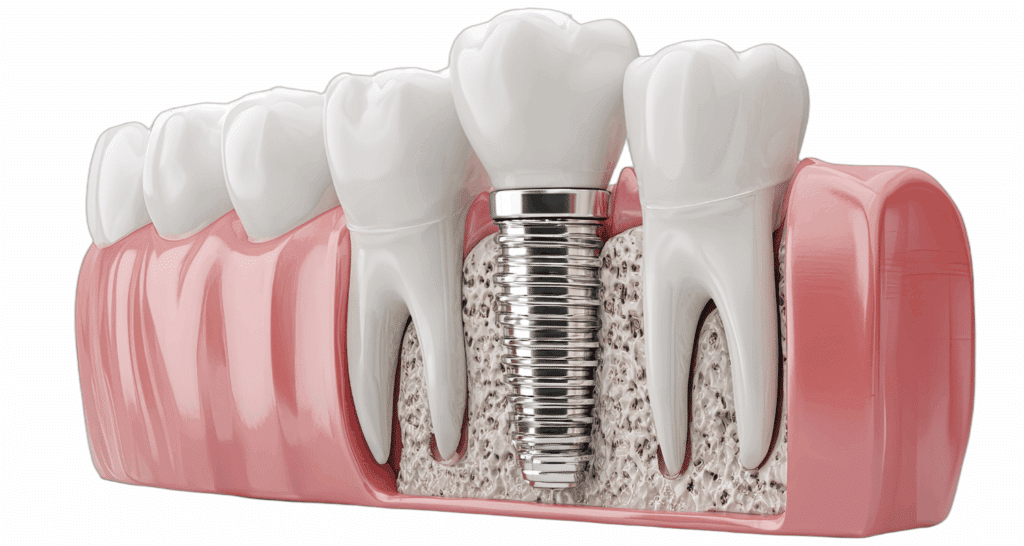
A dental implant is a small titanium post placed into your jawbone. It acts like a tooth root. Over time, the post fuses to the bone through a process called osseointegration.
Once the implant fuses, a crown is attached on top. The result looks and feels like a real tooth.
For this to work, your gums and bone must be healthy. Gums protect the implant from bacteria. Bone holds the post in place. Without both, the implant can fail.
This is why gum disease matters. If your gums are infected or your bone is weak, the implant has no solid foundation to hold onto.
How Gum Disease Affects Implants
Gum disease starts as gingivitis. At this stage, gums are red, swollen, and may bleed when you brush. If caught early, this can be reversed with professional cleaning and better home care.
When gingivitis is not treated, it turns into periodontitis. This is the advanced form. Periodontitis damages the tissue and bone that hold your teeth in place. According to the American Academy of Periodontology, about three out of four people have some form of gum disease.
Bone loss is the biggest problem when it comes to implants. If your bone has shrunk due to infection, there may not be enough support for an implant. Active infection also raises the risk of the implant failing after surgery.
This is why dentists do not place implants while gum disease is active. The infection must be controlled first. To learn more about preventive care for your gums, Dental Faith offers full gum health evaluations.
Can You Still Get Implants If You Have Gum Disease?
Yes, in most cases you can. The path depends on how far the disease has progressed.
If You Have Gingivitis
Gingivitis is usually reversible. A professional cleaning and a better daily routine can clear it up. Once your gums are healthy again, implants become a real option.
If You Have Periodontitis
This requires more work. You may need a deep cleaning called scaling and root planing. This removes bacteria from below the gum line. After treatment, your mouth needs time to heal.
Smoking and uncontrolled diabetes can slow healing and raise the risk of failure. Your dentist will talk with you about these factors during your consultation.
At Dental Faith, we take the time to assess your full gum health before any implant discussion. Call or text us at 615-285-3949 to schedule your first visit.
What If You Have Bone Loss?
Bone loss is common with gum disease. It also happens when a tooth has been missing for a long time. The good news is that there are solutions.
Bone Graft
A bone graft adds bone material to areas where it has been lost. This can come from a donor or from another part of your body. The graft fills in weak spots and gives the implant a solid base to fuse with.
Gum Graft
A gum graft restores tissue that has pulled back from the teeth. Healthy tissue is taken from another part of your mouth and placed where gum recession has occurred.
According to periodontists at Charleston Periodontics, both procedures are more comfortable than ever with modern techniques.
After grafting, your mouth needs time to heal before implant placement. This takes patience, but it greatly improves your chances of success. Dental Faith uses digital impressions and modern tools to plan each case carefully.
Dental Implant Success Rates
Implants have about a 98% success rate, making them one of the most reliable procedures in dentistry. But that number depends on a few things.
For the best results, you need active gum infection to be fully treated. You also need to brush and floss every day and attend regular dental checkups. A healthy lifestyle and no smoking also help.
Patients who had gum disease in the past can still enjoy high success rates if their mouth is fully prepared before surgery.
Why Choose Dental Faith in Nashville
Dr. M. Paula Fedler leads the Dental Faith team with over 20 years of experience. She trained in Colombia, Boston, and San Francisco, and has been serving Nashville patients since 2009.
She is a member of the American Dental Association (ADA) and the Tennessee Dental Association (TDA). Her team is fluent in both English and Spanish, making care more accessible for Nashville’s Hispanic community.
Dental Faith uses digital X-rays and intraoral cameras for accurate diagnosis. Every patient is treated with patience and care, including those with dental anxiety.
We serve families across Nashville, Brentwood, and Antioch. If you want to know whether implants are right for you, we can help. Call or text us at 615-285-3949.
Your Step-by-Step Path at Dental Faith
We make the process clear and simple from start to finish.
- Full exam and digital X-rays: We look at your gums, bone, and teeth to see the full picture.
- Gum health check: We measure your gum pockets and check for active infection.
- Periodontal therapy if needed: Deep cleaning or other gum treatments come first.
- Healing period: Your gums and bone need time to recover.
- Implant placement: Once your mouth is healthy, the implant post is placed.
- Crown placement: A natural-looking crown is attached to complete your smile.
- Ongoing care: Regular visits and good daily hygiene keep your implant healthy.
If you also need other dental work, our team handles restorative dentistry and emergency dental care too.
Frequently Asked Questions
Can you get dental implants with active gum infection?
No. Active infection must be fully treated before implant placement. Surgery during infection increases the risk of failure.
How long after gum disease treatment can I get implants?
It depends on the severity. Mild cases may take weeks. Advanced cases with grafting can take several months. Your dentist will give you a clear timeline.
Will implants fail if I had gum disease before?
Not necessarily. With proper treatment and good oral hygiene, most patients achieve strong, long-lasting results.
Do I need a bone graft before dental implants?
Only if bone loss has made the jaw too thin or weak. Your dentist will assess this with X-rays.
Are implants better than dentures if I had gum disease?
Implants are often preferred because they do not slip and feel more natural. They also support jawbone health. Ask your dentist which option works best for your situation.
Can smokers get dental implants with gum disease?
Smoking reduces healing and raises failure risk. Quitting or cutting back greatly improves your chances. Talk to your dentist honestly about your habits.
Ready to find out if implants are right for you? Schedule a consultation at Dental Faith today. Call or text 615-285-3949. We serve Nashville, Brentwood, and Antioch with bilingual, compassionate care.